

Why the right Revell adhesive makes the difference
Model making is about precision, patience and attention to detail. When assembling a model, you want seams to remain invisible, plastic parts to remain rock-solid, and delicate surfaces not to be damaged. This is exactly where the well-thought-out chemistry of the Revell brand comes into play. Unlike conventional household glue or all-purpose glue, special adhesives for plastic model building work via the principle of cold welding.
This means: The adhesive slightly dissolves the top layer of the plastic (usually polystyrene). When the parts are pressed together, the liquefied plastic molecules combine with each other. After curing, a seamless, extremely stable connection is created that is just as strong as the material itself. If you value professional results, you should use specially tailored adhesive.
The most popular Revell adhesives at a glance
The product range offers different adhesive variants so that you have the optimal tool at hand for every phase of your construction project. Depending on the size, material and accessibility of the location, you select the appropriate properties:
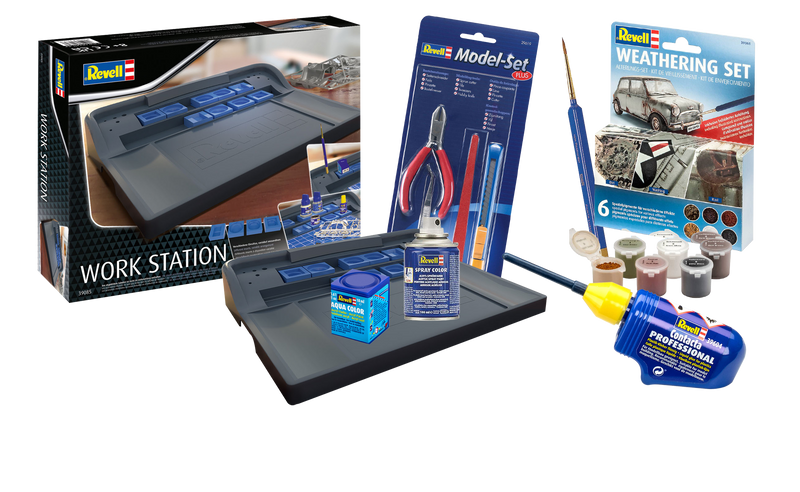
Revell Contacta Professional – The indispensable one with a needle cannula
The most well-known liquid glue among model makers is the Revell Contacta Professional. Its fine hollow metal needle allows you to dose with extreme precision. Even the smallest components in tiny canopies or fine antennas can be attached precisely without excess glue smearing the model. The liquid consistency also ensures that the adhesive penetrates deep into narrow gaps through capillary action.
Revell Contacta Liquid & Clear – For special tasks
If you need to glue larger areas, a brush adhesive like Contacta Liquid is the ideal choice. You can easily apply the adhesive to a large area before putting the components together. Are you looking for a solution for transparent parts such as cockpit panes, windows or headlight lenses? You should never use normal plastic glue here, as the solvents it contains would cloud the transparent plastic. Special transparent adhesives dry completely transparently and ensure a flawless appearance.
The right tool for every project
Whether you work on sophisticated historical ships like the iconic RMS Titanic by Revell work, legendary muscle cars from the series Revell USA assemble or captivating constructions from the area Revell Engineers implemented: The adhesive must suit your working style. While complex kits require the highest precision, beginners and projects are for younger builders in the segment Revell Kids ease of use is in the foreground.
Professional tips for perfect bonding
To ensure that your next model building project is a success, we have put together a few tried and tested tips from our workshop for you:
- Keep surfaces grease-free: Before gluing, wash the plastic moldings in lukewarm, soapy water. This is how you remove release agent residues from production.
- Remove paint before gluing: Adhesive welds plastic to plastic. If there is already paint on the adhesive surface, the adhesive only sticks to the paint layer. Gently scrape off the paint at the contact points with a scalpel.
- Less is more: Always apply glue sparingly. Too much glue can soften the plastic and create unsightly dents.
- Clean clogged cannulas: If the fine metal needle of your Contacta glue dries up, simply hold a fine lighter flame against the end of the needle for a second. The dried glue burns immediately and the needle is free again.